
How it works
Hospital-grade, made for life at home.
The hardest job for a wearable isn't taking a reading — it's taking a reliable reading while you cook, walk to the post office or roll over in your sleep. Here's how TOKO keeps the signal trustworthy under everyday life.
Oxygen reading you can trust while moving
Most wrist sensors stop being accurate the moment you stand up and walk. TOKO uses a more careful method that pulls the heartbeat out of the noise — so the SpO₂ number stays meaningful while you live your day, not just while you sit still.
Filters out the noise of real life
Sweat, sunlight, a sleeve brushing against the band — these normally corrupt readings on a wearable. TOKO cleans them out before any number is shown, so what you see is what's really happening.
Knows what you're doing
TOKO can tell whether you're upright, sitting, lying down, or walking — so when your heart rate goes up, your doctor can see whether it's because you climbed the stairs or because something deserves a second look.
The wrist and the chest, in sync
The two devices share the same clock. Every heartbeat seen by the chest patch lines up with the matching pulse on the wrist — giving your cardiologist a complete picture of how your heart and circulation are working together.
Tested, not just promised
The same accuracy your hospital uses.
Every TOKO is checked against the reference instruments hospitals actually use — Masimo for oxygen, a clinical-grade ECG monitor for heart rhythm, and Philips bedside equipment for breathing. The full validation report is available on request to your doctor.
Ask for the validation report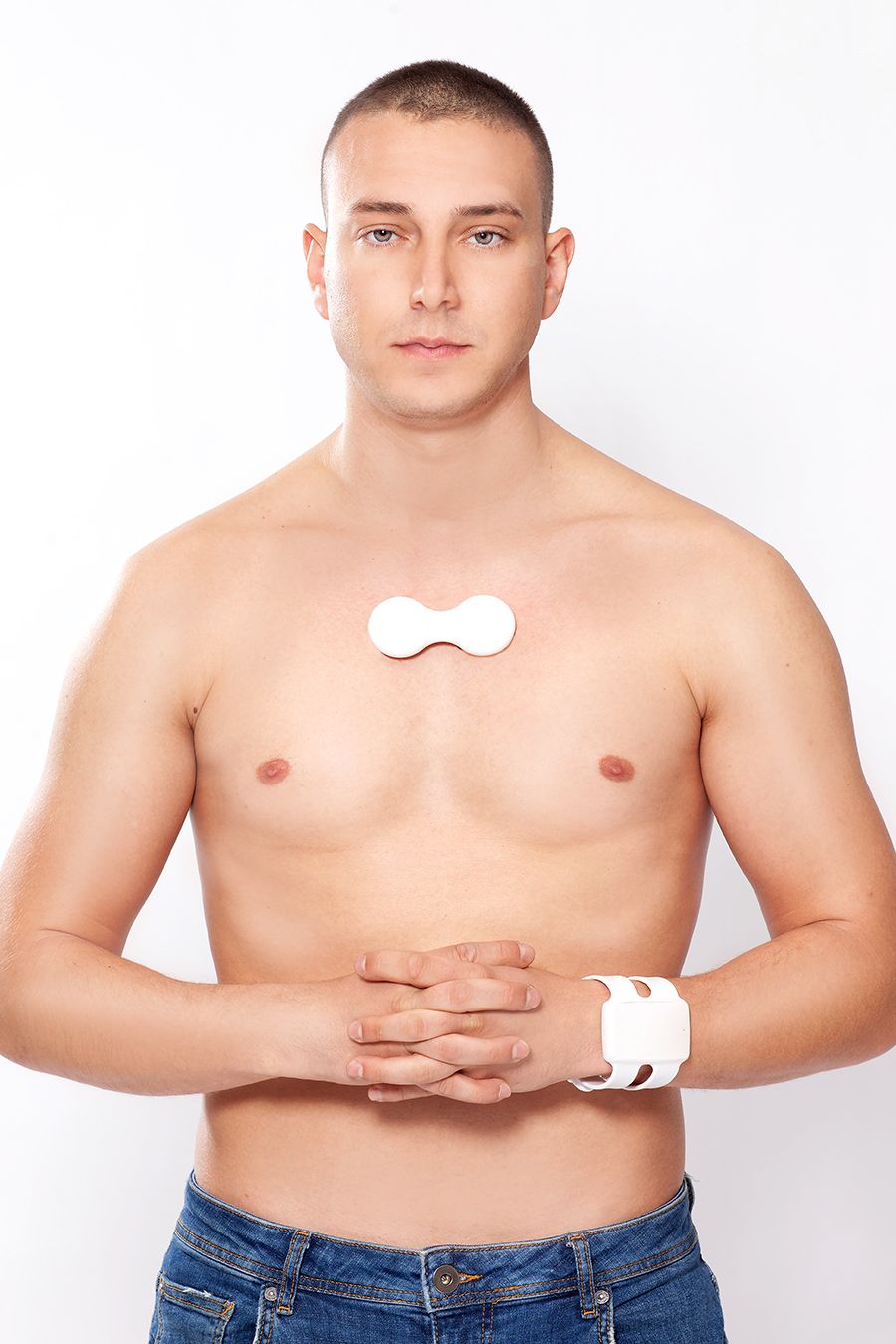
Your data, your home
Encrypted. Yours. Nobody else's.
Your readings are encrypted from the moment they leave your skin. We never sell them, never give them to advertisers, and never use them to train anything. The PDF report is yours to share — with your doctor, your family, or no one at all.